
Date
The Date field stores a calendar date in a record. Users can type a date directly or pick one from a calendar picker. It does not include a time component — for date and time together, use the Date and Time field.
For instructions on how to access field types or how to add one, see Field Types.
Capabilities
- Store a calendar date per record
- Select dates via a built-in calendar picker or by typing
- Filter and sort records by date (before, after, on, between)
- Use the value in Formula fields for date calculations
- Reference the field in automations as a trigger condition or action value
- Power date-based views and Gantt charts when combined with a Date Range field
How to add a Date field
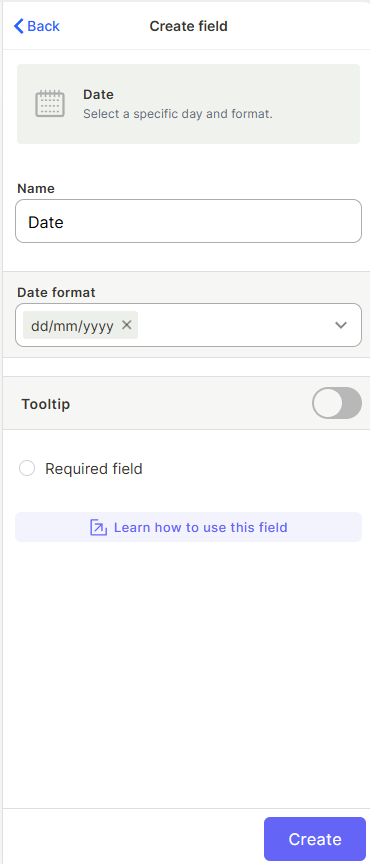
- Open your table and click + to add a new field.
- Select Date from the field type list.
- Enter a name for the field.
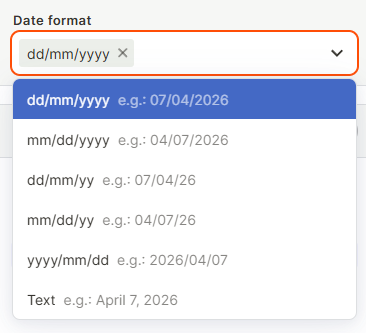
- Select Date format.
- Optionally mark the field as Required.
- Click Create.
Use Cases and Examples
- In a "Sales" flow, a Date field can store the date when a deal was closed.
- In a "Tasks" table, it can hold the due date for each task.
- In a "Clients" table, it can store the client's birthday or contract start date.
- In a "Projects" table, it can track the project kick-off date or deadline.
Keep in Mind
- The Date field does not include a time component — for records where the hour matters, use the Date and Time field instead.
- The field does not automatically set today's date when a record is created — configure this via an automation if needed.
FAQ
1 — What is the difference between Date and Date and Time?
The Date field stores only a calendar day. The Date and Time field stores a day plus a specific hour, making it suitable for scheduling events or tracking timestamps.
2 — Can I use a Date field in a formula or automation?
Yes. Date fields can be used in Formula fields to calculate days between dates, add or subtract days, or extract the month and year. In automations, you can trigger actions based on a date being reached or compare dates in conditions.
Updated 6 months ago